
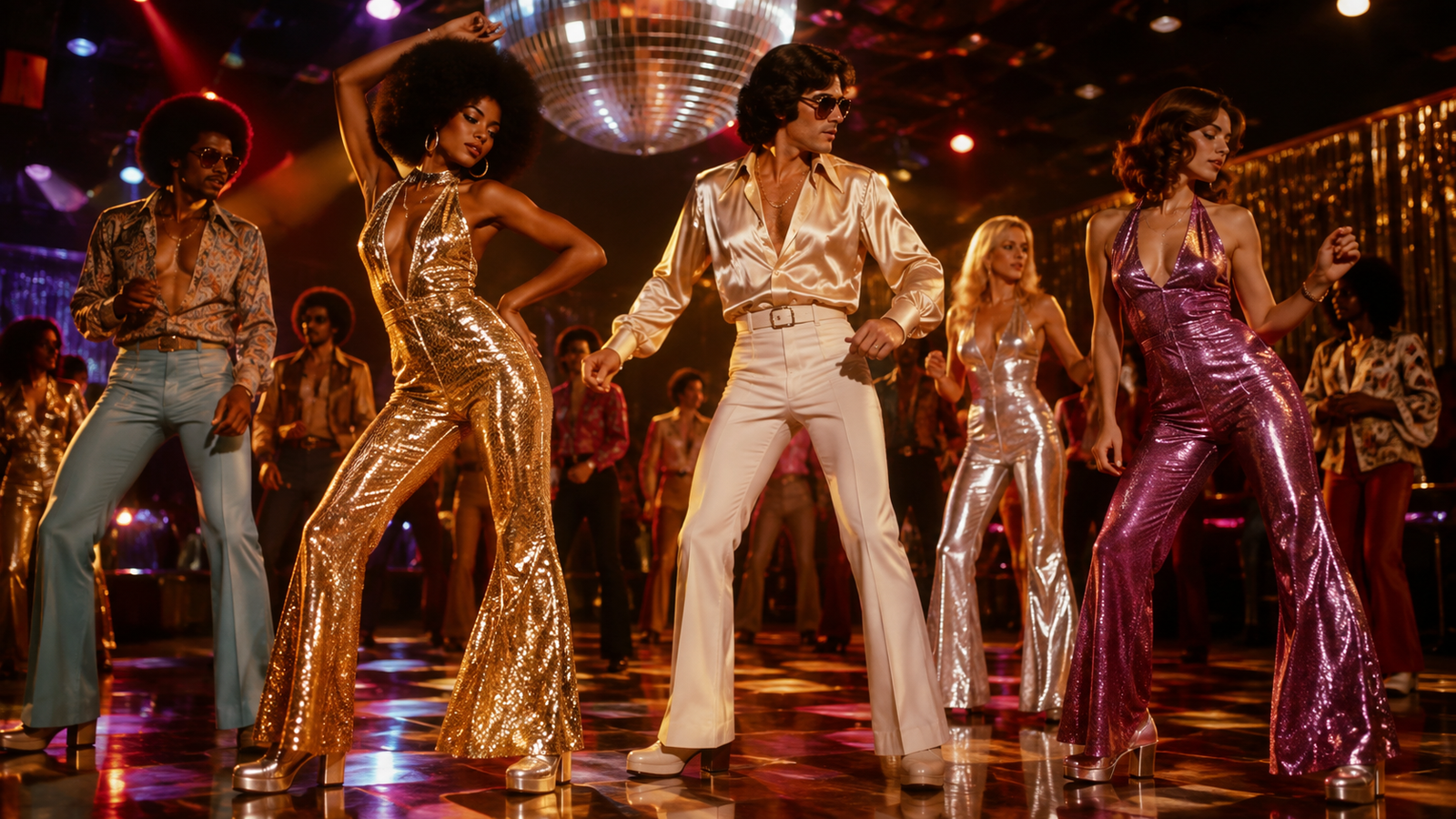
1970s disco outfits were made for movement. The best looks did not rely on one single “uniform”; they mixed fluid silhouettes, body-conscious cuts, flared trousers, shimmering surfaces, dramatic collars, and fabrics that came alive under nightclub lighting. That is why a convincing disco look can be glamorous without looking like a novelty costume. The key is to start with the silhouette, then add shine, texture, and accessories in a controlled way.
Fashion history supports that picture. The Fashion History Timeline’s overview of 1970–1979 notes that satin, sequins, and velvet were prominent on the dance floor as disco grew, while glamorous eveningwear and hot pants were part of the era’s nightlife vocabulary. Museum collections also preserve silk jumpsuits, sequined pantsuits, and fluid evening pieces by Halston, giving us a useful reality check against modern “70s costume” stereotypes.
Quick answer: For an instantly readable disco outfit, combine one strong 1970s silhouette—high-waisted flares, a jumpsuit, a wrap or halter shape, or a wide-collar shirt—with one glamorous element such as sequins, satin, metallic texture, or bold jewelry. Then keep the rest balanced.
What Did People Wear to Discos in the 1970s?
Disco fashion was less about dressing exactly alike and more about dressing for visibility, movement, and nightlife. Women’s looks could range from sleek jumpsuits and shimmering dresses to hot pants, halter tops, wrap silhouettes, and flowing jersey. Men’s looks often used close-fitting shirts with exaggerated collars, open necklines, tailored or high-rise flared trousers, coordinated suits, and glossy or patterned fabrics.
It is also important not to flatten the entire decade into disco. Denim, prairie dressing, sportswear, bohemian clothes, punk, and minimalist designer fashion all existed alongside nightclub glamour. Disco was one highly visible part of a much broader 1970s fashion landscape. That distinction helps an article—and an outfit—feel more historically grounded.
The Museum at FIT’s exhibition on Yves Saint Laurent and Halston describes both designers as defining figures of the decade’s chic, modern, and glamorous image. Halston in particular is closely associated with fluid, minimal eveningwear and the Studio 54 set, while Saint Laurent’s work shows how varied and sophisticated 1970s dressing could be beyond the obvious disco clichés.
Key Elements of Authentic 1970s Disco Fashion
Flares and high waists
Fitted through the hip and widening toward the hem, flared trousers create the long, rhythmic line most people immediately read as 1970s.
Jumpsuits
One-piece dressing looked modern, sleek, and practical for dancing. Museum collections preserve multiple Halston jumpsuits from the decade.
Shine and surface texture
Sequins, satin, metallic effects, velvet, and glossy synthetics reflected changing club lights and made simple shapes feel dramatic.
Fluid jersey
Stretch jersey moved easily and draped closely. Designer Stephen Burrows became famous for color blocking and innovative jersey work during the disco era.
Statement necklines and collars
Halter necks, plunging necklines, wrap fronts, and wide men’s collars created strong shapes without needing complicated layering.
Platforms and bold accessories
Chunky footwear, belts, hoops, pendants, scarves, and oversized eyewear could push a simple base outfit into clear disco territory.
For a museum example, see the Metropolitan Museum of Art’s Halston evening pantsuit (ca. 1971). The ensemble combines a relaxed silhouette with sequin-covered silk—an excellent example of how comfort and glamour could exist in the same look.
1970s Disco Outfits for Women
Original illustration: three ways to interpret women’s disco silhouettes—flared, sleek, and flowing.
1. The Sequin Jumpsuit
A fitted or softly draped jumpsuit is one of the strongest single-piece answers to the keyword “1970s disco outfits women.” Choose a deep V, halter, or simple sleeveless neckline and let the fabric provide the drama. If the jumpsuit is heavily sequined, keep jewelry relatively restrained.
2. Halter Top + High-Waisted Flares
This combination feels unmistakably 70s without requiring a full costume. A satin, metallic, or jersey halter top works well with black, white, jewel-tone, or patterned flares. A wide belt can sharpen the waist.
3. Metallic or Shimmering Midi/Maxi Dress
A fluid dress gives movement on the dance floor. Rather than choosing a stiff modern bodycon dress, look for drape, asymmetry, wrap construction, a scarf-like neckline, or a soft column silhouette.
4. Hot Pants + Glamorous Top
Hot pants appear in period fashion histories and can work for a bold party look. Balance them with a long-sleeved blouse, dramatic collar, tights, or a fluid top so the outfit feels styled rather than random.
5. Jersey Wrap or Color-Blocked Look
If you prefer color over glitter, take inspiration from the vivid jersey work associated with Stephen Burrows. The result can look energetic, body-aware, and dance-friendly without relying on sequins.
6. Minimal Studio 54-Inspired Look
A simple one-shoulder, halter, or column shape in silk-like fabric can be more believable than an outfit covered in every 70s motif at once. Add a strong cuff, long pendant, hoop earrings, or platform sandals.
Historical inspiration: the Met’s 1970s Halston jumpsuit and the museum’s other Halston evening pieces demonstrate how important silk, clean lines, and one-piece silhouettes were to the designer’s 1970s vocabulary.
1970s Disco Outfits for Men

Original illustration: men’s disco styling built around wide collars, fitted shirts, and flared trousers.
Wide-Collar Shirt + Flares
Start with a fitted button-down shirt with a noticeably wide collar. Wear it open at the neck, then pair it with high-rise trousers that flare below the knee. This works even in solid colors.
Monochrome Disco Suit
A coordinated jacket and flared trouser in cream, chocolate, burgundy, navy, or another rich tone can feel sharper than a novelty print. Underneath, wear a contrasting open-neck shirt or fine knit.
Patterned Shirt + Simple Trousers
If the shirt carries a bold geometric or swirling print, keep the trousers solid. This lets the 1970s pattern do the work without making the outfit visually chaotic.
Satin or Glossy Evening Shirt
For a club-focused look, a satin-like shirt adds shine while remaining wearable. Pair it with black or dark flares, a belt, and a modest heel or platform-style shoe.
Jumpsuit or One-Piece Statement
Men’s jumpsuits existed in the wider 1970s fashion and performance landscape. For a themed party, choose a tailored rather than baggy shape to avoid looking like workwear.
Studio 54-Inspired Outfits: Glamour Without the Costume Effect
Studio 54 has become shorthand for late-1970s nightlife glamour, but the most useful lesson is not “add more glitter.” It is confidence, fluidity, skin, strong silhouettes, and a sense that the outfit belongs in motion. The Met’s Halston collection notes that his fashionable clientele wore his designs in venues such as Studio 54. That gives us a concrete link between museum-preserved clothes and the nightclub image people are trying to recreate today.
Try one of these formulas: a silk-like jumpsuit with a long pendant; a draped dress with metallic heels; a wide-collar shirt with cream flares; a monochrome suit with an open neck; or a simple black base outfit with one spectacular sequined layer. The strongest looks usually have one focal point rather than five.
Authentic 1970s Disco Style vs. Modern Costume Cliché
| Element | More historically grounded | Costume cliché to avoid |
|---|---|---|
| Silhouette | High waist, flare, jumpsuit, wrap or fluid column | Every 70s symbol combined in one outfit |
| Fabric | Satin, jersey, sequins, velvet, metallic accents | Cheap plastic shine from head to toe |
| Color | Jewel tones, neutrals, white, black, warm earth colors, vivid brights | Only neon rainbow colors |
| Accessories | One or two bold pieces: belt, hoops, pendant, scarf | Huge wig + giant glasses + multiple novelty props |
| Overall effect | Sleek, sexy, energetic, dance-ready | Fancy-dress caricature |
Popular Colors and Fabrics for a Disco Look
A disco palette does not have to be a rainbow. Choose a base color and one highlight. Strong combinations include black + gold, cream + bronze, deep purple + silver, teal + gold, burgundy + pink, or white + metallic accents. Earth tones can also work when the silhouette is strongly 1970s.
For fabrics, think about how the material behaves under light and in motion. Satin catches highlights; sequins throw small flashes; velvet absorbs and reflects light differently depending on the pile; jersey drapes and stretches; silk-like fabrics move fluidly. The Fashion History Timeline specifically identifies satin, sequins, and velvet as dance-floor fabrics of the era, which makes them useful choices when authenticity matters.
70s Disco Accessories That Actually Improve the Outfit
Original illustration: platform-inspired footwear, statement eyewear, a wide belt, and a scarf—accessories that can transform a simple base outfit.
Platforms or block heels: Choose a stable pair you can actually walk and dance in. Comfort matters more than exaggerated height.
Wide belts: Useful with jumpsuits, dresses, or high-waisted trousers when you want to emphasize the waist.
Hoops and long pendants: They add movement and shine without competing with a strong garment.
Scarves: Wear at the neck, in the hair, or tied to a bag for an easy vintage cue.
Oversized sunglasses: Best as an arrival/photo accessory rather than something you need to wear all night.
Small metallic or glossy bag: A practical finishing piece that supports the eveningwear mood.
1970s Disco Hair and Makeup
Hair should support the outfit rather than become a costume prop. Depending on your own hair texture and style, options include a natural rounded shape, soft feathered layers, glossy curls, a center part, or a sleek pulled-back look. The era included far more variety than a single “disco wig.”
For makeup, choose one or two focal features: luminous skin, a glossy lip, defined lashes, metallic shadow, or a softly smoked eye. A little shimmer works with the theme; heavy glitter on every feature can make a historically inspired outfit feel more like modern festival styling.
Easy DIY 70s Disco Outfit Ideas
You can build a convincing disco outfit without buying a complete costume. Start in your wardrobe or a thrift store and prioritize shape over labels.
DIY Women’s Look 1
Black flared trousers + satin camisole or halter-style top + wide belt + hoop earrings.
DIY Women’s Look 2
Simple maxi dress + metallic shoes + long pendant + glossy curls.
DIY Men’s Look 1
Fitted open-neck shirt + high-waisted trousers + belt + heeled boot.
DIY Men’s Look 2
Monochrome trousers and jacket + patterned shirt + one chain or pendant.
Last-Minute Unisex Look
Dark flares + fitted top + metallic scarf or sequined layer + platform-inspired footwear.
What to Avoid if You Want the Outfit to Feel Authentic
- Using every recognizable 70s symbol at once. Pick a lane: sleek disco, glamorous jumpsuit, patterned menswear, or color-blocked jersey.
- Confusing hippie and disco fashion. They overlapped in time, but a flower-crown bohemian look communicates something different from late-night disco glamour.
- Ignoring fit and movement. Disco clothes should look good while walking and dancing, not only while standing still.
- Choosing painful shoes for the sake of accuracy. A stable block heel or modest platform is more useful than a dangerously tall novelty shoe.
- Copying a famous person’s look exactly when you can instead borrow the silhouette, fabric, or styling logic and make it personal.
Quick Outfit Guide: Choose Your Disco Mood
| Mood | Core piece | Add | Keep simple |
|---|---|---|---|
| Glam | Sequin jumpsuit | Metallic heels | Jewelry |
| Studio 54 | Fluid dress or sleek suit | One statement accessory | Prints |
| Retro casual | Flares | Patterned shirt/top | Shine |
| Bold color | Jersey dress/top | Contrasting belt | Accessories |
| Last minute | Dark trousers | Satin or sequined layer | Everything else |
Frequently Asked Questions About 1970s Disco Outfits
What is a typical 1970s disco outfit?
A typical look combines a strong 1970s silhouette—such as flared trousers, a jumpsuit, a wrap or halter shape, or a wide-collar shirt—with a nightlife fabric or finish such as satin, sequins, velvet, or metallic detail.
What should a woman wear to a 70s disco party?
A sequined or fluid jumpsuit, halter top with high-waisted flares, metallic dress, wrap silhouette, or simple column dress with bold accessories all work. Choose one dominant statement and build around it.
What should a man wear to a 70s disco party?
Try a fitted wide-collar shirt with flares, a monochrome suit with an open neck, a patterned shirt with simple trousers, or a satin-like evening shirt. A belt and heeled or platform-inspired shoe can finish the look.
Were bell-bottoms popular at discos?
Flared trousers were an important 1970s silhouette and translate naturally into disco styling. They are not the only option, but they are one of the clearest visual cues for the decade.
Did people wear jumpsuits in the 1970s?
Yes. Museum collections preserve multiple 1970s jumpsuits by designers such as Halston, including silk and evening examples.
How can I make a 70s disco outfit from clothes I already own?
Look for high-waisted or flared trousers, a fitted or satin top, a wrap or maxi dress, a blazer, a wide belt, statement jewelry, and block-heeled shoes. Add one shiny element rather than buying a complete themed costume.
Is disco fashion the same as all 1970s fashion?
No. Disco is one part of the decade. The 1970s also included denim, bohemian looks, sportswear, minimal designer fashion, punk, and many other styles.