
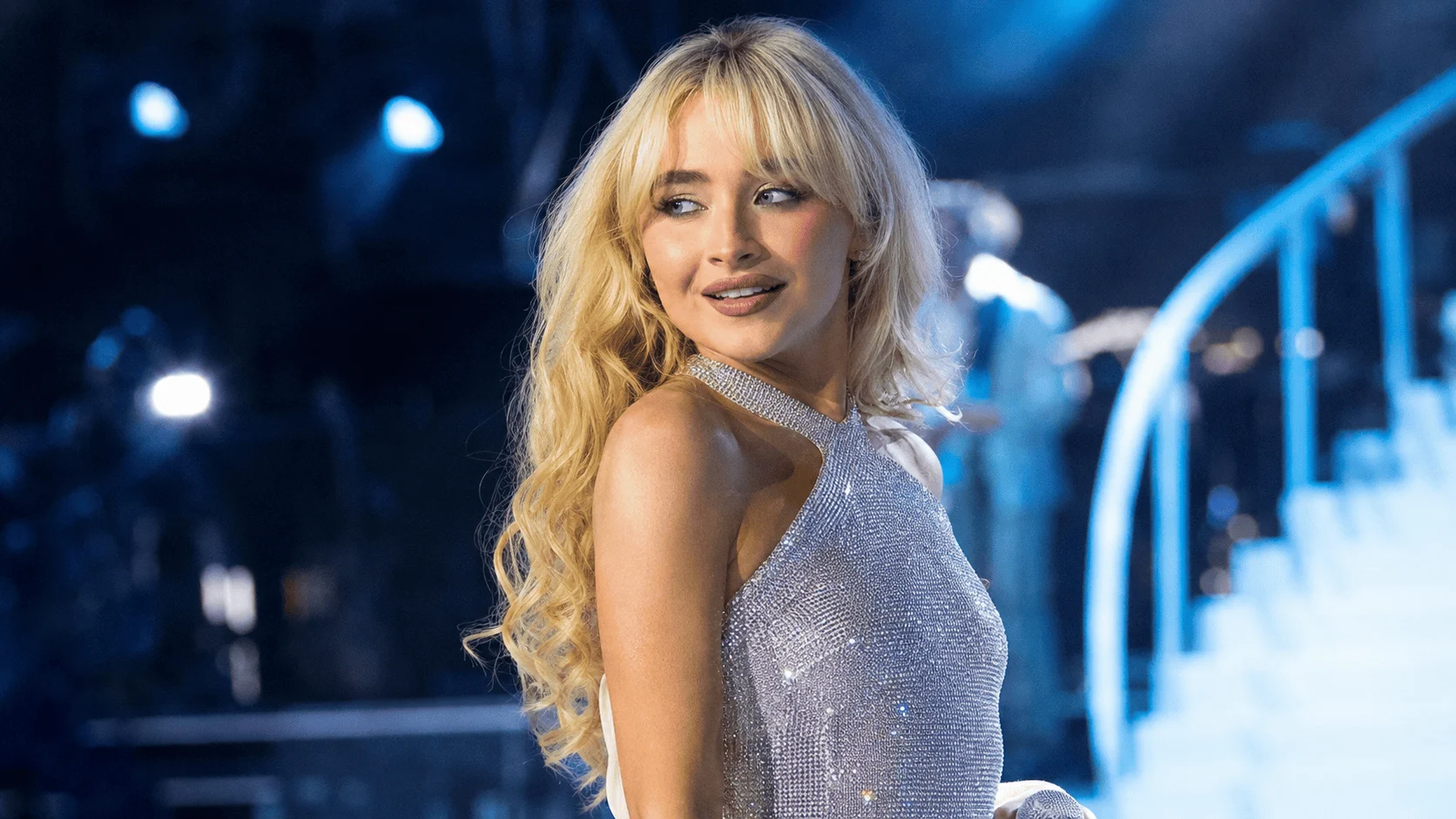
| Editorial safety note This article intentionally does not reproduce, link to, or validate invasive or non-consensual intimate imagery. It addresses celebrity-photo search intent through official photos, public fashion coverage, media literacy, and verification guidance. |
Interest in Sabrina Carpenter’s photos often rises around concerts, awards shows, fashion events and new music. That interest is understandable: her public image has become closely tied to theatrical stage styling, Old Hollywood references and highly photographed red-carpet moments. The problem is that celebrity-image searches can also surface recycled captions, edited pictures, AI-generated material and posts that strip a real image of its original context. This guide focuses on a better way to browse: start with official or reputable sources, understand where a photo came from, and verify questionable claims before sharing them.
For publishers, this approach is also stronger editorially. Instead of building a page around shock value, it answers the practical questions readers actually have: Where are the latest public photos? Which outfits are being discussed? Is a viral image authentic? What source originally published it? That is the kind of added value Google’s people-first content guidance encourages.
| Quick answer The most reliable places to start are Sabrina Carpenter’s official channels, primary event coverage, established fashion or entertainment publishers, and properly licensed photo archives. A reposted image without a source, date or photographer credit should be treated as unverified until you can trace it back. |
Why Sabrina Carpenter photo searches keep spiking
Carpenter’s visual presentation is a major part of her pop identity. A new performance can generate several different photo stories at once: stage design, costumes, beauty details, designer credits, fan reactions and clips from the same show. Search interest also rises after major red carpets and televised performances because people want to identify a dress, compare looks or find high-quality photographs from the event.
That dynamic was visible in 2026. Vogue’s Coachella coverage described four custom Dior looks developed for Carpenter’s headlining set, while Vogue’s 2026 Met Gala report documented a custom Dior dress built around film-strip imagery and an Old Hollywood reference. These are useful examples of why a trustworthy image article should link back to the publication that actually reported the design details rather than copy a viral caption from social media.
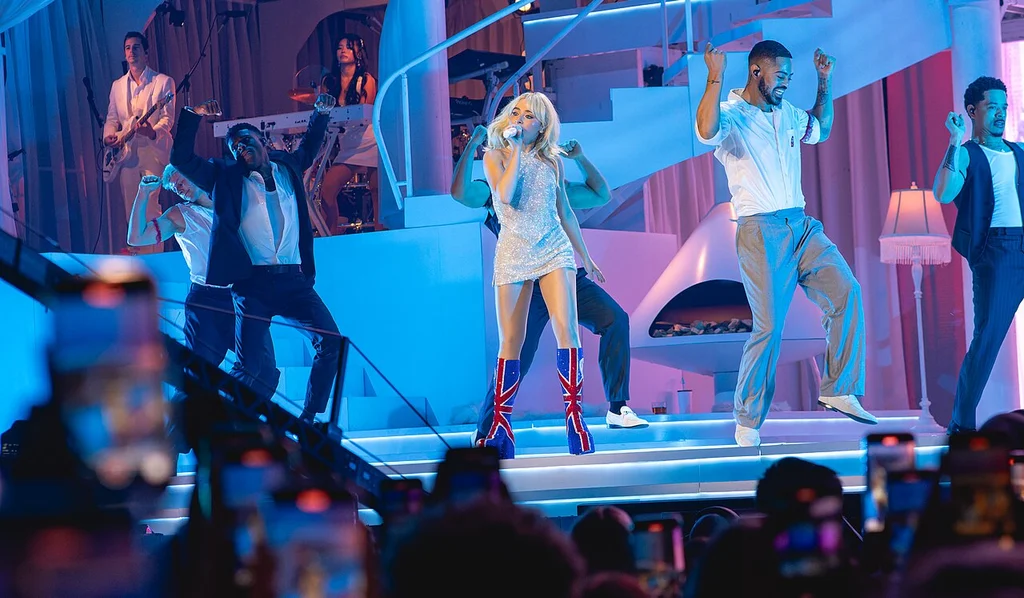
Sabrina Carpenter performing at The O2 in London, March 2025. Photo by Raph_PH.
Start with official and primary sources
When the goal is to see current, authentic public imagery, the shortest path is usually the source closest to the event. Carpenter’s official website is useful for releases and official updates, while her official artist channel on YouTube is a primary source for music videos and performance uploads. For example, the official 2026 GRAMMY “Manchild” performance is published on her verified artist channel, giving readers a direct reference for the performance rather than an anonymous repost.
For fashion details, original event reporting matters. A reputable fashion publication may identify the designer, stylist, inspiration and materials in a way that a fan account cannot. That extra context is what turns an image roundup into useful journalism rather than a gallery assembled from borrowed screenshots.
- Official artist channels: best for official music videos, live performances, release artwork and announcements.
- Original event coverage: best for red-carpet context, designer credits, venue information and photographer attribution.
- Licensed photo archives: best when you need a photograph you are legally permitted to reuse under a stated license.
- Established reporting: best for verifying dates, names, quotes and the context around a look or performance.
Recent fashion and public appearances worth referencing
Coachella 2026: performance fashion as storytelling
At Coachella 2026, Carpenter’s styling was designed as part of a larger cinematic stage idea. Vogue reported that she worked with stylist Jared Ellner, creative director Brett Alan Nelson and Dior designer Jonathan Anderson on four custom looks. The broader takeaway for an image-focused article is not simply that the outfits were eye-catching; it is that each photograph has a traceable event, designer and editorial source. Read Vogue’s Coachella fashion report for the original fashion context.
Met Gala 2026: a film-inspired Dior reference
At the 2026 Met Gala, Carpenter wore a custom Dior design that referenced the 1954 film “Sabrina.” Vogue’s coverage noted the film-strip treatment and the connection to Audrey Hepburn’s classic movie. That kind of primary fashion reporting is valuable because it gives a reader something a raw image cannot: the creative reason behind the look. See Vogue’s Met Gala report and Vogue’s red-carpet video for first-hand event context.
Why misleading celebrity images spread so easily
A celebrity photo can lose its context in minutes. Someone downloads a legitimate picture, crops out the watermark or caption, uploads it to another platform and adds a new claim. The next person sees only the new caption. Even when the underlying photograph is real, the story attached to it may be false.
AI tools add another layer. A convincing image can now be created or altered without the obvious visual mistakes that used to make fakes easy to spot. The U.S. Federal Trade Commission explains that image-based abuse can involve real images, digitally altered images or AI-created deepfakes. The FTC’s guidance is aimed at harm prevention rather than celebrity gossip, but the underlying lesson applies broadly: do not assume an intimate or sensational image is authentic simply because it looks realistic. .
| Important publishing rule Do not republish intimate, manipulated or suspicious imagery just to “debunk” it. You can explain the verification process, link to authoritative safety guidance, and describe why a claim is unverified without amplifying the harmful material itself. |
How to verify a Sabrina Carpenter image before you share it
- Find the earliest credible source. Search for the same image on an official account, event photographer page, reputable publication or licensed archive. A source with a date, caption and photographer is more useful than a screenshot of a repost.
- Check the event and date. Ask whether the clothes, hairstyle, venue and surrounding people match the event named in the caption. If a post claims a 2026 event but the same photo appears in a 2025 archive, the caption is wrong.
- Use reverse image search. Reverse search can reveal older versions, original crops and unrelated pages that reused the picture. The Associated Press verification guidance specifically recommends identifying the original source, using reverse image search and comparing trusted reporting when authenticity is uncertain.
- Look for corroboration. Major public events are photographed by many outlets. If a dramatic image supposedly came from a high-profile red carpet or concert but no credible outlet has anything similar, that absence is a reason to be cautious—not proof by itself, but a useful warning sign.
- Inspect the context, not just the pixels. AI artifacts can be subtle or absent. Source history, publication date, photographer credit and independent corroboration are often more reliable than trying to judge fingers, teeth or shadows by eye.
- When in doubt, do not publish it. The Associated Press says material suspected of being a false depiction should not be treated as verified reality. For a publisher, uncertainty should lower the urge to post, not increase it.
| E-E-A-T opportunity Add a short “How we verified this” box to the published page. State which official channels, event reports and image-license pages you checked, when the page was updated, and what you chose not to publish. That makes the editorial process visible to readers. |
Can Reddit and YouTube be useful for research?
Yes, but they serve different jobs. YouTube is strongest when you are using an official or verified channel as a primary source. Reddit is more useful for discovering what fans are asking, which outfits are generating discussion, or which claims are circulating. It should not be the final authority for a factual statement about whether an image is real.
A practical workflow is: use Reddit or social media to identify a question, then verify the answer through official material or established reporting. If fans are debating the inspiration for a Met Gala look, for example, use that discussion to understand reader interest—but cite Vogue’s interview or report for the actual designer and inspiration.
How publishers should cover celebrity image rumors responsibly
Celebrity search traffic can tempt publishers into aggressive headlines, but trust is hard to rebuild once readers realize a page exaggerated a rumor. A better editorial model is to acknowledge that misleading images circulate, explain what can and cannot be verified, and guide readers toward reliable sources.
- Use neutral headlines. Avoid implying that an unverified image is real just to increase clicks.
- Name your sources. Link to the original event report, official video or licensed image page whenever possible.
- Credit photographs correctly. A photo being visible online does not mean it is free to republish. Check the license and required attribution.
- Separate fact from fan reaction. A Reddit thread can show what people are discussing; it does not establish what happened.
- Avoid unnecessary repetition of invasive search terms. Write the page for readers seeking accurate photo information, not for the sensational phrasing of a query.
- Show your update date. If a new event changes the context, revise the article and explain the update instead of merely changing the timestamp.
SEO details that make this page more useful
Use the main keyword naturally in the title, H1, introduction, one or two subheadings, image alt text where genuinely descriptive, and the meta description. Do not force it into every paragraph. Add internal links to related articles on Sabrina Carpenter’s music, Met Gala fashion, Coachella performances, celebrity style, AI-image verification or media literacy if those pages exist on your site.
For external links, prefer sources that add evidence rather than generic authority. In this article, provides primary audiovisual material; and the FTC plus Associated Press support the discussion of altered imagery and verification. That is a much stronger backlink pattern than scattering unrelated high-domain-authority links.
Frequently asked questions
Where can I find official Sabrina Carpenter photos and videos?
Start with her official website and verified social or artist channels. For event photographs, use the event organizer, reputable editorial coverage or properly licensed archives. The closer the source is to the original event, the easier it is to verify context.
How can I tell whether a Sabrina Carpenter image is AI-generated or edited?
Do not rely on visual oddities alone. Trace the source, search for earlier versions, compare the event details, use reverse image search and look for independent coverage. If the image cannot be traced to a credible source, label it unverified rather than guessing.
Are fan accounts and Reddit reliable sources?
They can be useful for discovering trends, questions and reactions. For factual claims, verify the information through a primary source or reputable publisher before presenting it as true.
Can I reuse celebrity photos from Google Images?
Not automatically. Search results show images from many copyright owners. Use photographs you have permission to use, images supplied under an appropriate Creative Commons license, your own photography, or licensed editorial media. Follow the exact attribution requirements of the license.
Should a publisher target sensational or invasive celebrity-photo wording in the headline?
A safer and more durable strategy is to target the legitimate informational need behind the search—official photos, recent public appearances, fashion, image authenticity and rumor verification—without turning the page into a destination for invasive content. This also makes the article easier to support with credible sources and a clear editorial purpose.