
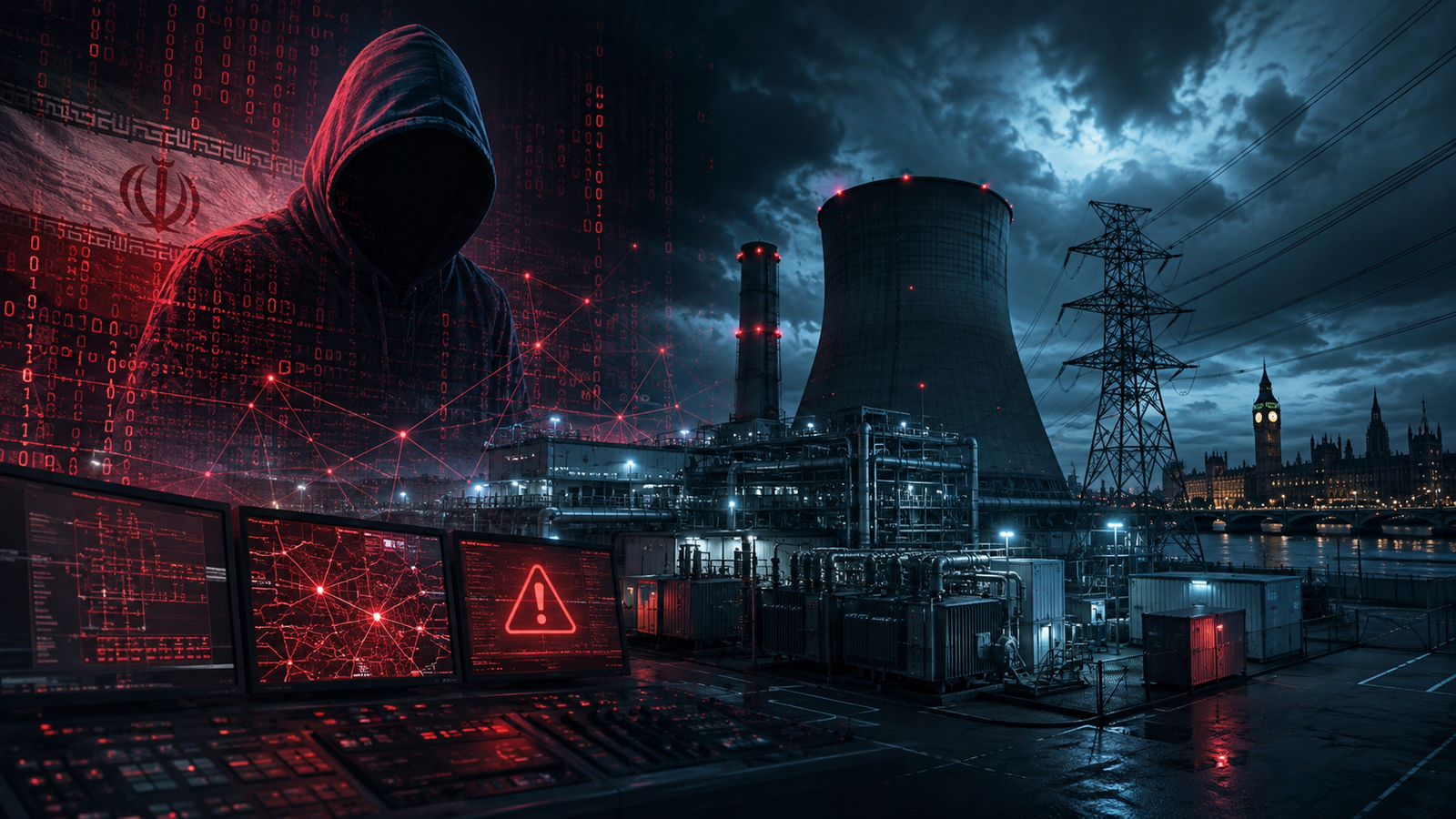
Iranian Hackers Shut Down UK Power Plant for Four Days
A reported cyberattack linked to Iran forced a small UK energy facility offline for four days. Because of this, many people started searching whether Iranian hackers shut down UK power plant systems on a larger scale. Reports say the incident happened in July 2026, but it became public in late August.
The Telegraph reported that hackers affiliated with Iran shut down the site. The Times and The Independent also said the generator stayed offline for four days while engineers worked to restore operations.
However, the UK government said the affected site was only a small-scale energy generator. It also said there was no risk to the wider energy system. So, while the attack was serious, it did not shut down the national grid.
What happened in the cyberattack?
According to media reports, the attackers gained enough access to disrupt the operation of a small British energy site. As a result, the facility stopped working and remained offline for four days.
This is what makes the incident important. Many cyberattacks only involve stolen data or website disruption. In this case, the attack reportedly affected real-world energy operations.
At the same time, some key details are still unknown. For example, the public has not been told the exact technical method used in the breach. Also, officials have not revealed the name or location of the site.
Did Iranian hackers shut down the whole UK power grid?
No, they did not shut down the whole UK power grid. This is one of the most important points in the story.
Although headlines suggest Iranian hackers shut down UK power plant infrastructure, the UK government said the incident only affected one small generator. It also stressed that the wider electricity network was never in danger.
So, the correct takeaway is simple. A real shutdown happened at one small site, but Britain did not face a national blackout.
Why this incident matters
This case matters because modern energy systems depend heavily on digital tools. These include office systems, remote monitoring platforms, and industrial control systems.
If hackers move from normal IT systems into operational systems, the results can become much more serious. Instead of only stealing data, attackers may interrupt physical services.
That is why this incident stands out. Even though the site was small, a four-day outage shows that cyberattacks can create real operational problems.
The UK had already warned about Iran-linked cyber activity
Earlier in 2026, the UK’s National Cyber Security Centre (NCSC) warned organisations to strengthen their cyber defences. The warning came during a period of increased tension in the Middle East.
The NCSC said Iranian state and Iran-linked cyber actors had the capability to conduct cyber operations. It also pointed organisations to guidance on phishing, denial-of-service attacks, and industrial control system threats.
Because of that warning, this new incident fits into a broader pattern of growing concern around state-linked cyber threats.
Britain is also improving energy sector security
The UK government’s Energy Sector Cyber Security Strategy explains that geopolitical conflict has increased cyber risks for critical infrastructure.
The strategy also notes that Iran-based threat actors have shown interest in industrial control systems. In addition, it focuses on improving resilience, response planning, and recovery across the energy sector.
Therefore, the reported shutdown is not only a breaking news story. It is also a reminder that even smaller operators must improve cyber protection.
What is still unknown?
Even now, several important questions remain unanswered.
- The name of the affected generator
- The exact location of the site
- The method used by the attackers
- The internal systems that were compromised
- The identity of any specific hacking group
- Whether the attackers were directly controlled by the Iranian state
For that reason, responsible reporting should avoid overstating what is confirmed.
Was the UK incident linked to US infrastructure attacks?
Some reports noted that the UK incident happened around the same period as cyber incidents affecting US infrastructure. However, timing alone does not prove that the same group was behind every case.
Right now, the safest conclusion is that the incident happened during a period of rising concern about attacks on critical infrastructure. Any stronger claim should wait for official confirmation.
What could happen next?
The operator will likely continue recovery work and close any security gaps that allowed the disruption. At the same time, the wider energy sector may review access controls, system monitoring, backup procedures, and incident response plans.
In addition, the government has reportedly shared advice with power-sector leaders. That matters because lessons from one incident can help other operators prevent similar attacks.
Bottom line
Reports say Iranian hackers shut down UK power plant operations at a small British energy generator for four days. Even so, the wider UK electricity system was not at risk.
The case is still important because it shows how cyberattacks can affect physical infrastructure. It also highlights why the UK is pushing energy companies to improve cyber resilience. Until more official details are released, the best approach is to avoid exaggeration while still recognising the seriousness of the disruption.
FAQ
Did Iranian hackers shut down the whole UK power grid?
No. Reports say one small generator was shut down for four days. The wider grid was not at risk.
Which UK power plant was attacked?
The facility has not been publicly identified. Reports only describe it as a small-scale energy generator.
How long was the facility offline?
It was reportedly offline for four days.
Has a specific Iranian hacking group been confirmed?
Public reporting links the incident to Iran-linked hackers, but no specific group has been publicly confirmed with certainty.