
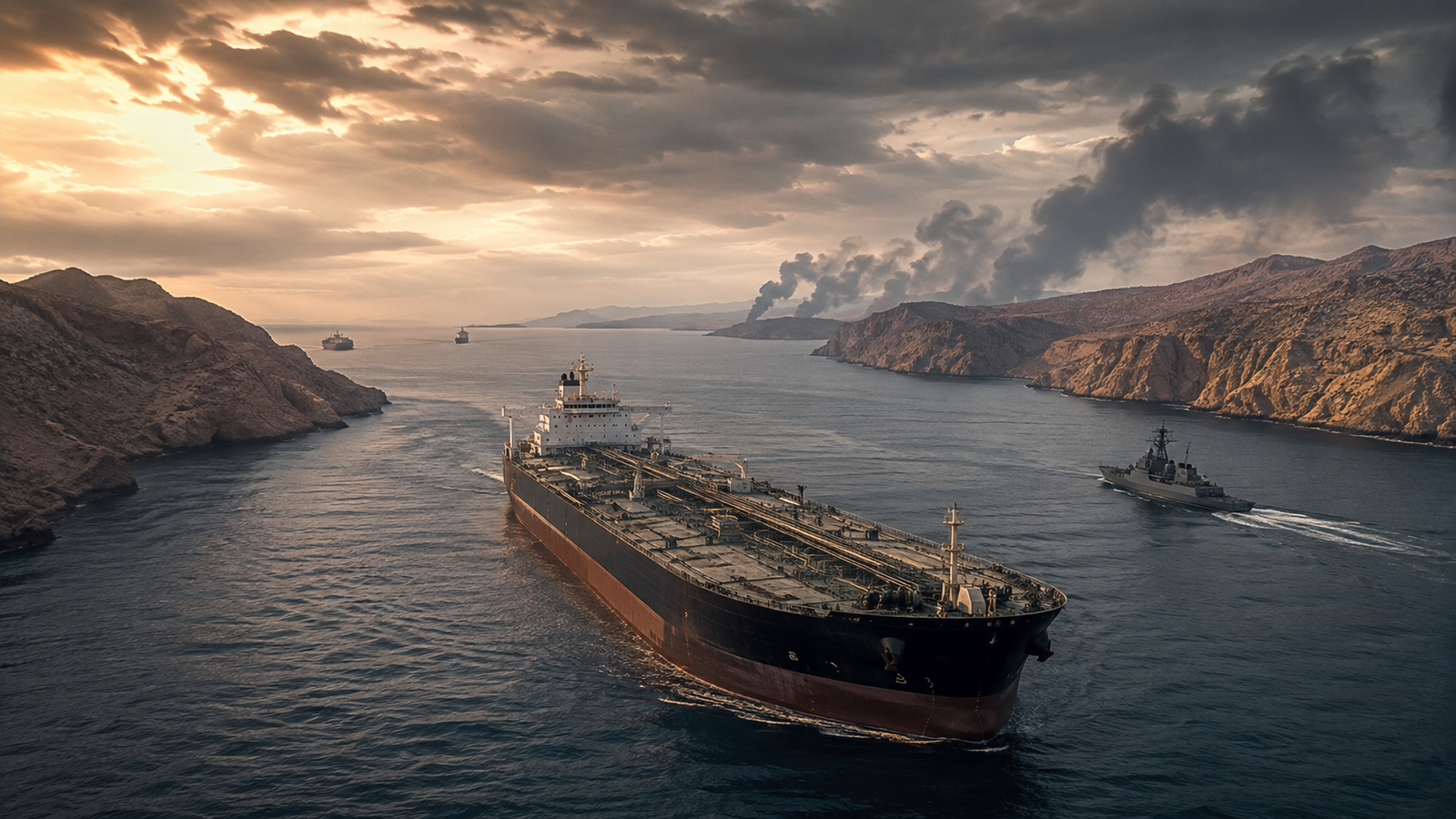
| Quick AnswerThe latest escalation began after U.S. forces struck two Iranian launchers on Larak Island on 30 August. U.S. officials said the launchers posed an imminent threat to shipping in the Strait of Hormuz. Iran condemned the strike and said it retaliated against U.S. bases in Jordan. Oil prices rose more than 2%, while the wider war continues to disrupt one of the world’s most important energy routes. |
On 30 August 2026, U.S. forces struck two Iranian launchers on Larak Island, near the Strait of Hormuz. Reuters described it as the first known U.S. strike on Iran since late July. U.S. Central Command said the launchers were being prepared for rockets that could deploy naval mines and called the situation an imminent threat to international shipping. Reuters report
Iran’s Revolutionary Guards condemned the attack and said it would respond. Early on 31 August, the IRGC said it had launched attacks on two U.S. bases in Jordan. Al Jazeera also reported Iranian claims of strikes against U.S. military targets elsewhere in the Gulf. Because wartime claims can be difficult to verify immediately, reports about individual attacks should be treated with care until independent confirmation is available. Reuters on Iran’s claimed Jordan strikes | Al Jazeera live updates
Why the Strait of Hormuz matters
The Strait of Hormuz is a narrow waterway between Iran and Oman. It connects the Persian Gulf with the Gulf of Oman and the Arabian Sea. Tankers carrying oil and liquefied natural gas from major Gulf producers use this route to reach global markets.
The U.S. Energy Information Administration (EIA) says 20.9 million barrels per day of oil and petroleum liquids moved through Hormuz in the first half of 2025. That was equal to about 20% of global petroleum liquids consumption and roughly one-quarter of seaborne oil trade. The EIA also says 11.4 billion cubic feet per day of LNG moved through the strait in the same period, representing more than 20% of global LNG trade. EIA Strait of Hormuz data
Hormuz at a glance
| Measure | Latest useful benchmark |
| Oil flows, 1H 2025 | 20.9 million barrels/day |
| Oil flows, Q2 2026 | 4.9 million barrels/day |
| LNG flows, 1H 2025 | 11.4 billion cubic feet/day |
| LNG flows, Q2 2026 | 0.8 billion cubic feet/day |
| Saudi + UAE bypass pipeline capacity | About 4.7 million barrels/day |
Source: U.S. EIA chokepoint analysis and August 2026 Short-Term Energy Outlook.
How much has shipping changed during the war?
The war has sharply reduced energy traffic through the strait. EIA estimates show total oil flows through Hormuz falling from 21.6 million barrels per day in the fourth quarter of 2025 to 4.9 million barrels per day in the second quarter of 2026. LNG flows fell from 10.5 billion cubic feet per day in the fourth quarter of 2025 to 0.8 billion cubic feet per day in the second quarter of 2026. EIA August 2026 energy-security update
These figures show why the Hormuz story is not only about military events. It is also about whether ships can move safely, whether insurers are willing to cover voyages, and whether Gulf producers can get energy to buyers on time.
Oil prices rose after the renewed fighting
Energy markets reacted quickly to the latest strikes. Reuters reported that Brent crude rose more than 2% to about $90.31 a barrel, while U.S. West Texas Intermediate reached about $85.23 a barrel. Prices can move quickly, so these numbers should be treated as a snapshot rather than a fixed level. Reuters oil-market report
The International Energy Agency (IEA) said in its August 2026 Oil Market Report that the ongoing Hormuz closure and high fuel prices were weighing on oil demand. It forecast global oil demand to decline by 1.6 million barrels per day in 2026. The IEA also said Gulf exports remained far below pre-war levels. IEA Oil Market Report – August 2026
Can Gulf producers bypass the Strait of Hormuz?
Only partly. Saudi Arabia and the United Arab Emirates have pipelines that can move some oil without using the strait. The EIA estimates that their main bypass routes can provide about 4.7 million barrels per day of capacity. That is useful, but it is much smaller than the normal volume that has historically moved through Hormuz. EIA chokepoint analysis
This capacity gap explains why a long disruption can still tighten global supply even when alternative pipelines are operating.
Why Asian economies are especially exposed
Asia is the main destination for crude oil moving through Hormuz. The EIA estimates that 89% of crude oil and condensate passing through the strait in the first half of 2025 went to Asian markets. China, India, Japan and South Korea together accounted for 74% of those flows. EIA destination data
That means a longer disruption can affect refiners, airlines, shipping companies and manufacturers across Asia. Higher energy costs can also feed into transport prices and, over time, the cost of everyday goods.
What is the wider state of the Iran war?
The current conflict has lasted about six months, and there is still no durable settlement. The latest exchange around Larak Island shows that even after quieter periods, the risk of renewed direct strikes remains. At the same time, the economic pressure created by reduced shipping has become one of the war’s biggest international effects.
Associated Press reported that the U.S. strike on the Iranian launchers was the first American military action against Iran in about a month. AP also noted that the wider dispute over Hormuz remains unresolved. AP report
What happens next?
The next stage will depend on three things: whether the latest military exchange expands, whether commercial shipping can keep moving through Hormuz, and whether diplomacy can produce a workable arrangement for safe transit. A major new disruption could put more upward pressure on oil and shipping costs. A stable agreement, by contrast, could reduce the risk premium in energy markets.
Readers should also be careful with dramatic social-media claims. During fast-moving conflicts, videos, casualty numbers and claims about destroyed facilities can appear before they are independently verified. For reliable updates, compare several major news organizations and official energy data rather than relying on a single viral post.
Frequently Asked Questions
Is the Strait of Hormuz closed?
The route has been heavily disrupted, and traffic is far below normal levels. The exact status can change quickly because of security conditions, naval activity and commercial decisions.
Why is Larak Island important?
Larak Island sits close to the Strait of Hormuz, so military activity there can raise immediate concerns about shipping safety and access to the waterway.
How much oil normally passes through Hormuz?
In the first half of 2025, about 20.9 million barrels per day of oil and petroleum liquids moved through the strait, according to the EIA.
Did oil prices rise after the latest U.S.-Iran strikes?
Yes. Reuters reported a rise of more than 2% after the Larak Island strike, with Brent crude moving above $90 a barrel.
Can the world replace Hormuz shipping with pipelines?
Not fully. Saudi Arabia and the UAE have important bypass pipelines, but their combined capacity is only a fraction of normal Hormuz oil flows.