
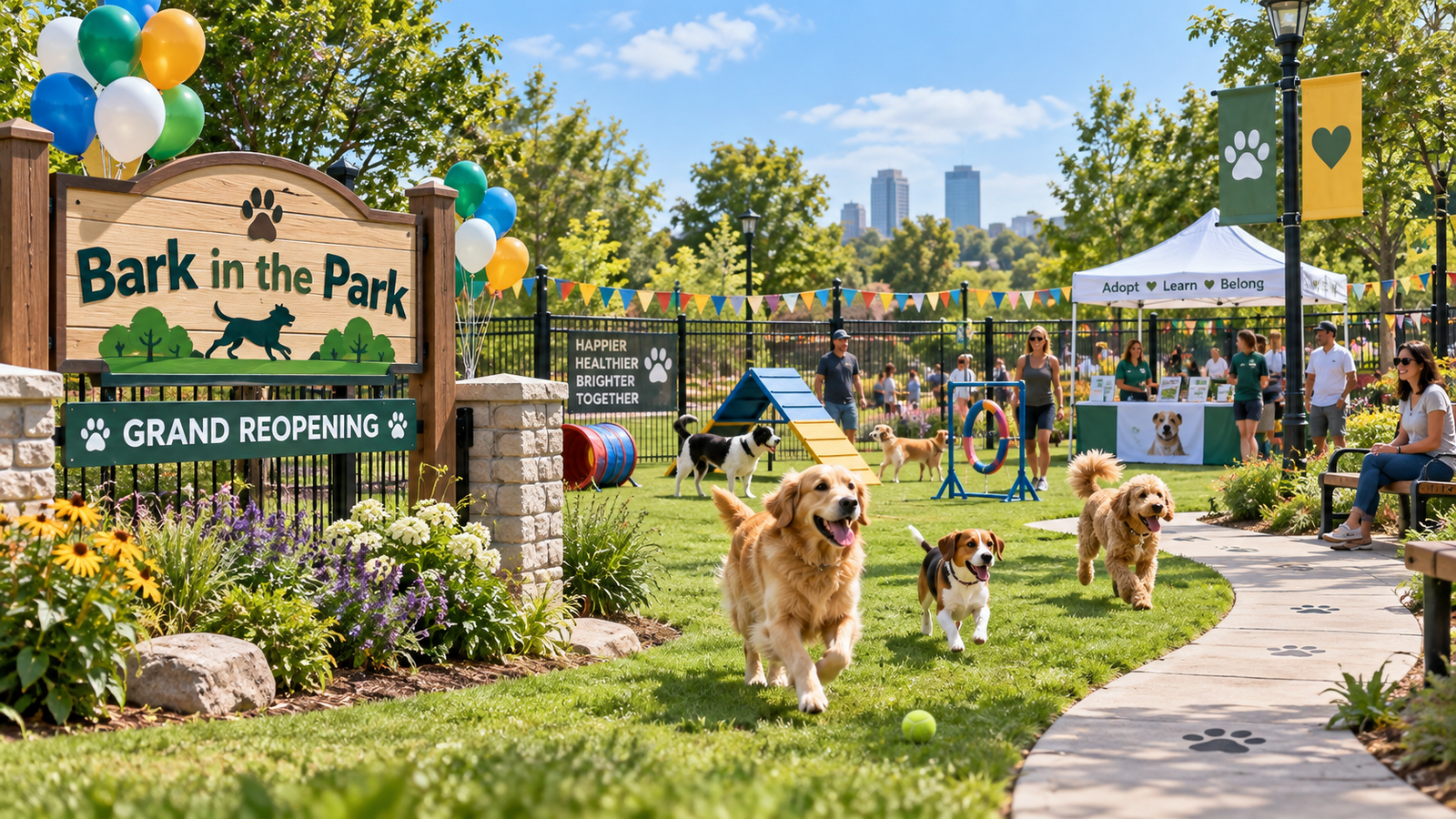
Quick Answer
In the passage, “Bark in the Park” celebrates the reopening of a renovated dog park at Meadowview Park. The flyer gives Saturday hours from 11 a.m. to 3 p.m. It also mentions a pet adoption activity with a local humane society. The park has separate spaces for small and large dogs. It also has agility features, water areas, digging areas, and drinking fountains. The flyer lists simple park rules. Owners must watch their dogs and clean up after them. Children under 14 need adult supervision. The flyer also says visitors should not bring food or dog toys into the fenced area.
What Is the Bark in the Park Grand Reopening Event?
The passage presents the reopening as a community dog park event. The flyer tells local residents that the renovated park has opened again. It shows the new features and explains the park rules. It also tells readers about a pet adoption activity. The tone feels positive because the flyer wants people to visit. Still, its main job is to share clear event and park information.
You can also find this phrase on QuestionAI, Brainly, and Quizlet. These pages help show what people search for. They are study pages, not official city event pages.
The Main Details Readers Should Notice
1. The reopening is the central event
First, identify why the flyer exists. It announces the reopening of a renovated dog park. This fact gives the rest of the passage a clear setting. The new play areas and longer hours explain what changed at the park. They also show why the reopening matters.
2. Pet adoption is part of the celebration
The flyer says a local humane society will join the event for pet adoption. This makes adoption the clearest activity in the passage. Reading questions may offer other choices, such as tours or contests. Do not choose them unless the text supports them. Pick the answer that the flyer states directly.
3. The park is designed for different types of dog activity
The passage mentions separate spaces for small and large dogs. It also lists an agility area, a swimming pond, a digging area, and drinking fountains. These details show that the park offers several ways for dogs to play and exercise.
4. The rules are part of the meaning, not background decoration
A short rule can lead to an inference question. The flyer says visitors cannot use dog toys inside the fenced area. A person who throws a ball there breaks that rule. You do not need outside knowledge to reach this answer. You only need to connect the action with the rule.
Why Does the Flyer Use Words Like “Expanded,” “Improved” and “Extended”?
These words show that the park changed. “Expanded” points to more space. “Improved” points to a better version of something that already existed. “Extended” points to longer hours. The flyer does not give a full before-and-after list. Still, these words ask readers to compare the old park with the new one. That makes comparison the best fit for a question about this wording.
This type of question tests how words shape meaning. ATI includes word meaning, writer purpose, and text structure in its Reading goals. Read the official ATI TEAS Version 7 content outline.
Common Questions From the Passage, Explained
What happens at the grand reopening?
The local humane society takes part in a pet adoption activity. The flyer says this directly. You do not need to infer the answer.
Why might a visitor be asked to leave the fenced dog park?
A visitor may have to leave after breaking a park rule. For example, the flyer does not allow dog toys inside the fenced area. Throwing a ball there would break that rule.
What type of writing should an adoption brochure use?
A humane society may want a brochure to encourage people to adopt a dog. In that case, persuasive writing fits the goal. The brochure can still include facts. However, its main purpose would be to influence a choice.
What is the main idea of the flyer?
The flyer announces the dog park’s grand reopening. It explains the updated features and park rules. It also promotes the pet adoption activity.
What can be inferred from the new-feature wording?
The wording suggests that the park has changed for the better. The flyer does not describe every old feature. However, words such as “expanded” and “improved” point to an earlier version of the park. That makes this answer an inference based on the wording.
Why the Dog Park Rules Make Sense in Real-World Context
Real-world sources can help explain why the park rules sound reasonable. The American Kennel Club recommends close owner supervision and responsible clean-up. It also notes the value of safe dog-park habits. Read AKC guidance on dog park etiquette.
The pet adoption part also fits real shelter work. The ASPCA explains how shelters and rescue groups help people adopt pets. Adoption can also create space for other animals that need care. See ASPCA adoption tips. Use these sources for background only. When you answer a reading question, follow the passage first.
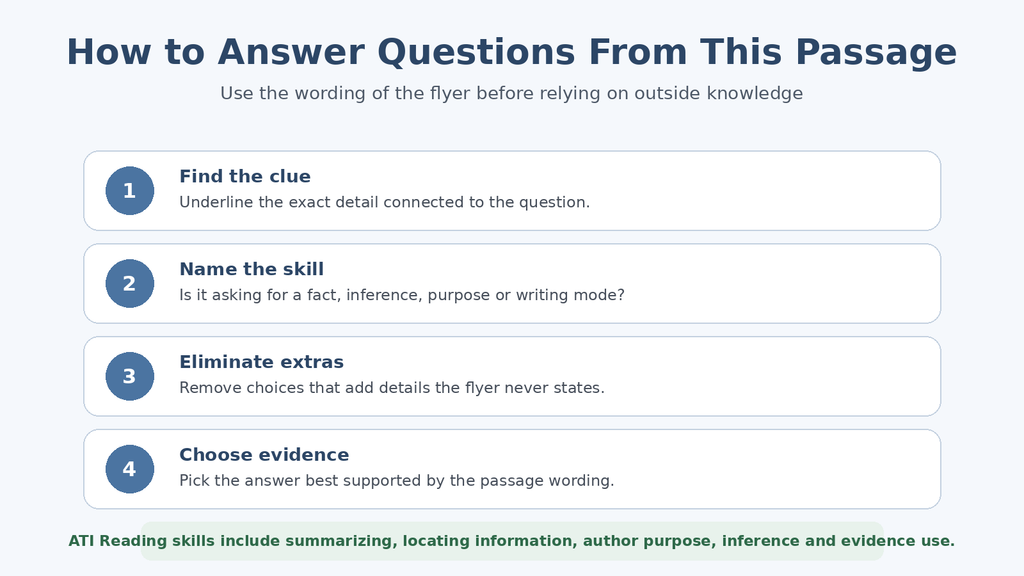
How to Solve This Type of Reading Passage Faster
Start with the question, then scan the flyer
Short flyers pack many facts into a small space. Read the question first. Then scan for the detail you need. You may need a time, rule, activity, comparison word, or writing purpose.
Separate explicit details from inference
A direct statement gives you an explicit fact. For example, the flyer clearly mentions a pet adoption activity. An inference needs one extra thinking step. The words “expanded” and “improved” suggest that the new park offers more than the old one.
Do not reward an answer just because it sounds realistic
A wrong answer can still sound realistic. Dog events may include many activities, but the passage may not mention them. Choose the answer that the text supports. Do not choose an option only because it sounds possible.
Watch the verbs in the question
Pay attention to the main verb in the question. Words such as “states” and “according to” usually ask for a direct fact. Words such as “suggests,” “implies,” and “can be concluded” usually ask for an inference.
Use author-purpose clues
Ask what the writer wants the reader to do. A flyer with hours, features, and rules mainly gives information. A brochure that asks people to adopt a dog tries to persuade them. The purpose depends on the writer’s goal.
ATI lists many of the same reading skills. These include finding facts, making inferences, summarizing text, and understanding writer purpose. ATI also groups Reading into Key Ideas and Details, Craft and Structure, and Integration of Knowledge and Ideas.
Frequently Asked Questions
Is Bark in the Park at Meadowview Park a verified current event?
The exact phrase appears mainly on study and question-answer pages. I did not find an official current Meadowview Park listing that matches this exact flyer. Treat it as a reading passage unless an official local source confirms a real event.
Is “Bark in the Park” a name used for real dog events?
Yes. Real community pet events often use similar names. However, those events are separate from the Meadowview Park passage. For example, Fairfax County promoted a 2026 “Park and Bark” event. That real event featured adoptable dogs, food, and vendors. It shows that this event style exists in real life, but it does not verify the Meadowview Park flyer.
What is the best one-sentence summary?
The flyer announces a dog park reopening. It highlights the new features, explains the rules, and promotes a pet adoption activity.
Why is the “no toys” rule important for a reading question?
The rule creates a direct evidence link. If someone uses a toy inside the fenced area, that person breaks a stated park rule.
Should an article copy the original flyer word for word?
No. A useful article should explain the passage in fresh wording. It should also show the reasoning behind common questions. Helpful sources can add context without copying the original passage.
What kind of schema suits this page?
Article schema and breadcrumb markup make a good base. You can also keep an FAQ section on the page for readers. Only add FAQ structured data when it follows Google’s current rules and matches the visible page content.