
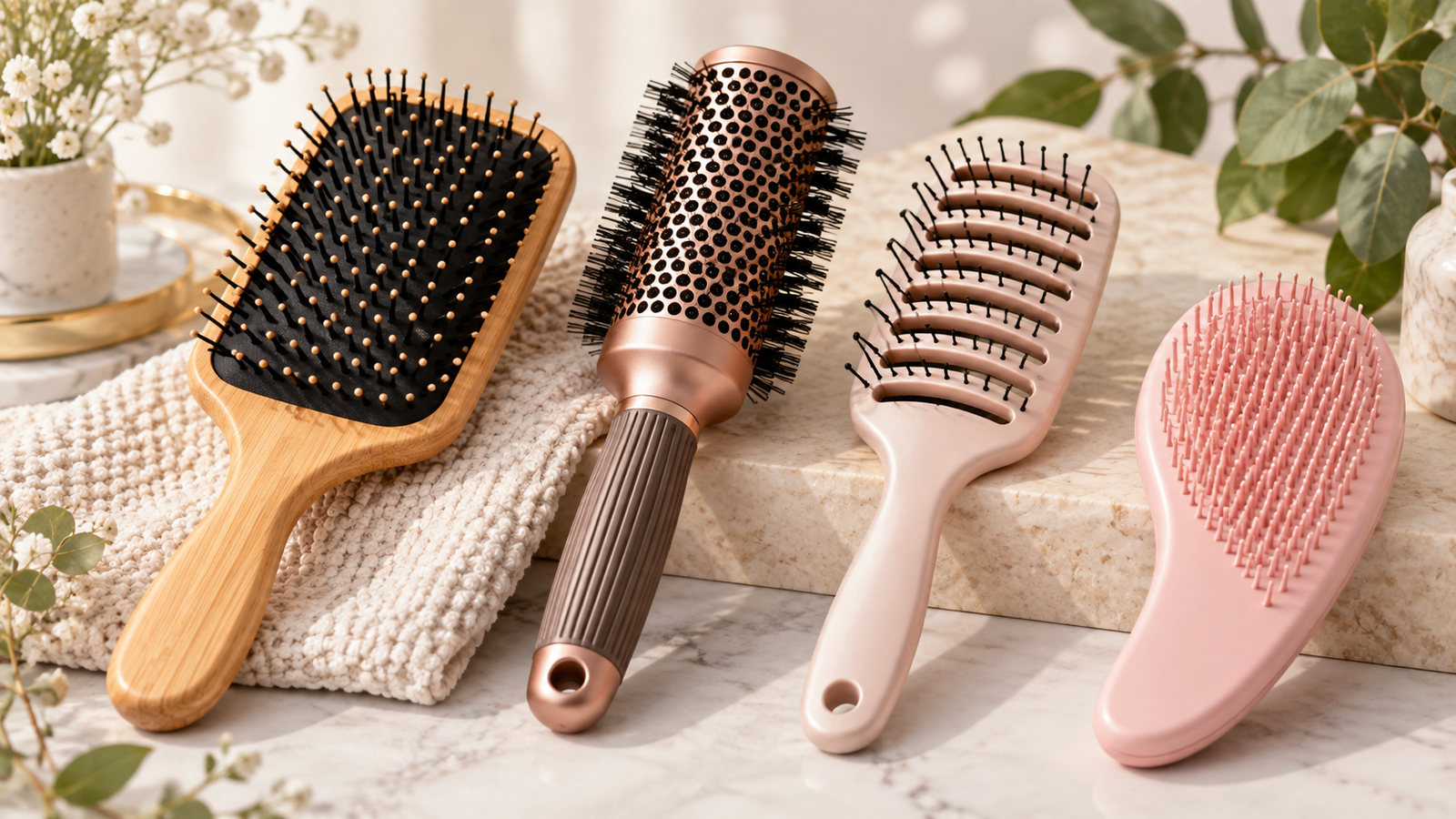
| Quick answer: For general detangling, look for flexible teeth or soft pins. For smoothing long or straight hair, a paddle brush is a useful everyday choice. For blow-drying and shape, use a round brush. For curls, choose tools made for detangling or defining without aggressive pulling. |
Why the Hair Brush You Choose Matters
A brush touches the hair every time you use it. A stiff brush, a brush that catches, or too much force can pull the hair and cause breakage. The American Academy of Dermatology (AAD) recommends gentle handling. It also advises people to brush only as much as they need for styling instead of using many repeated strokes.
Your hair condition matters too. Wet hair may break more easily for many people. Curly or textured hair, however, can often be easier to detangle while it is damp and has conditioner on it. Because hair needs differ, one hair brush cannot suit everyone.
Main Types of Hair Brushes
| Brush type | Usually best for | Main job | Buying note |
| Detangling brush | Straight, wavy, curly; wet/dry depends on design | Loosening knots with less tugging | Look for flexible, rounded teeth or pins. |
| Paddle brush | Medium to long straight or wavy hair | Smoothing larger sections | A wide base covers more hair per pass. |
| Round brush | Blow-drying and styling | Volume, bend, shape and smoothness | Barrel size changes the amount of curl or lift. |
| Vent brush | Quick blow-dry styling | Airflow around the hair | Useful when you want less bulk around the brush head. |
| Boar or mixed bristle brush | Often straight or wavy hair | Smoothing and spreading natural oils | Choose softer bristles for delicate hair. |
| Curl-defining styling brush | Curly or coily hair | Clumping and shaping curls | Technique and tension matter; avoid aggressive pulling. |
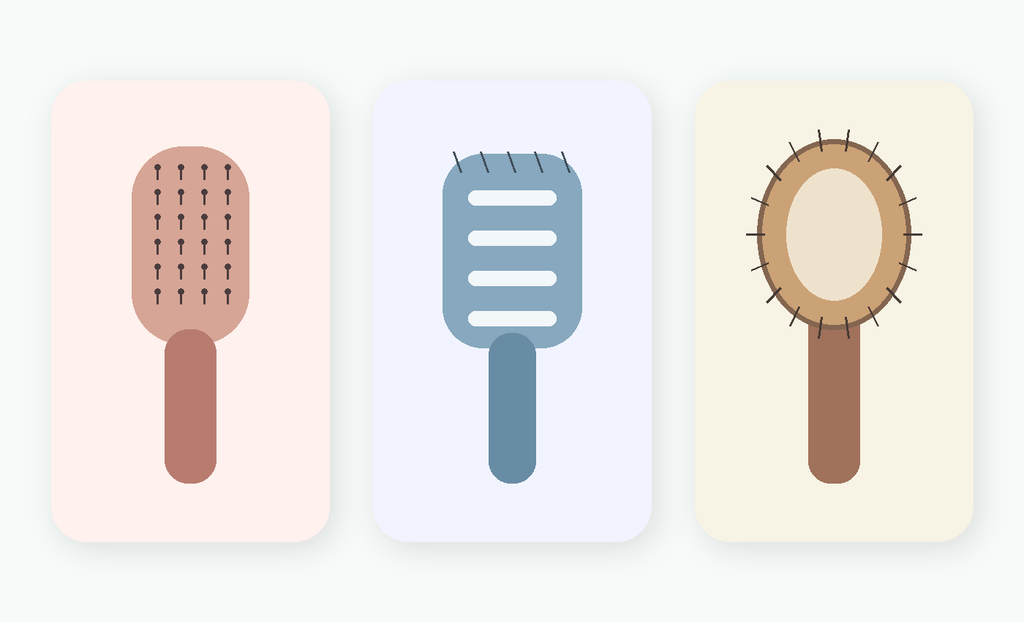
Illustration: three common brush shapes used for smoothing, airflow, and blow-dry styling.
1. Detangling Brush
A detangling brush helps you work through knots with less pulling than a very stiff brush. Many popular detanglers have flexible teeth or bristles that bend when they meet a knot. This type works well for people who want a simple everyday brush instead of a tool for a full blowout.
Good for: everyday detangling, longer hair, and anyone who wants a gentle-feeling brush. Check the product label to see whether you can use the brush on wet hair, dry hair, or both.
2. Paddle Brush
A paddle brush has a broad, flat head. It can smooth a large section of hair at one time. This brush often works well for medium to long hair. Depending on the model, you can use it for everyday brushing or to smooth hair while blow-drying.
3. Round Brush
A round brush mainly helps with styling. Pair it with a blow dryer to add lift at the roots, create a soft bend, or make hair look smoother. A small barrel creates tighter curves. A large barrel gives looser movement and more volume.
Some round brushes have ceramic-coated barrels and large airflow holes. For example, Olivia Garden markets its Ceramic + Ion Thermal range for blow-dry styling and uses a ceramic barrel with a vented shape. Follow the brush and dryer instructions, and avoid too much heat.
4. Vent Brush
Vent brushes have open spaces in the head. The gaps let more air move around the hair while you blow-dry it. A dermatology review of hairbrush types notes that people can use vented brushes across different hair types to improve airflow.
5. Boar or Mixed Bristle Brush
People often choose boar-bristle and mixed-bristle brushes for smoothing. These brushes can spread natural scalp oils through the hair. They usually suit straight and wavy hair better than heavy detangling. If your hair feels fragile, start with softer bristles.
How to Choose a Hair Brush for Your Hair Type
Fine or Fragile Hair
Choose soft, flexible teeth or bristles for fine or fragile hair. Do not force the brush through knots. Work in small sections, start at the ends, and then move higher. Many brushes for fine hair use soft or widely spaced teeth to reduce pulling.
Thick Hair
Thick hair often needs a brush that can move through a full section without feeling harsh. A strong detangling brush or a wide paddle brush may feel easier to control. If your hair is very thick, divide it into sections before brushing.
Curly and Coily Hair
Curly and coily hair needs extra care because rough brushing can disturb the curl pattern and create more tangles. Many people find it easier to detangle curls while the hair is damp and has conditioner on it. The AAD advises people with thick or curly hair to comb gently in the shower before rinsing out conditioner. Start at the ends, then move upward little by little.
For styling, a curl-defining brush such as the Denman D3 can add tension and help shape curl groups. It may not suit every curl pattern. Use light pressure and stop if the brush feels harsh or uncomfortable.
Straight or Wavy Hair
A paddle brush or flexible detangling brush can work well for straight or wavy hair. If you use a blow dryer, you may prefer a round or vented brush. For a smooth finish, some people like a soft natural-bristle or mixed-bristle brush.
Illustration: gentle brushing works best when the tool matches the hair texture and the job you are doing.
Popular Hair Brush Brands and What They Focus On
Commercial searches for “hair brush” often show retailers, brand pages, and buying guides. Do not choose a brush only because of the brand name. Compare its shape, hair-type fit, and main purpose. These four well-known examples can help you understand the differences:
- Wet Brush Original Detangler — the brand offers this flexible detangling brush for straight, wavy, curly, and coily hair. Wet Brush also says you can use it on wet or dry hair.
- Tangle Teezer The Original / Ultimate Detangler — these brushes use flexible two-tier teeth. The brand sells options for straight-to-wavy, fine or fragile, and curly-to-coily hair.
- Denman D3 Original Styler — this seven-row styling brush focuses on curl definition, blow-drying, and smoothing instead of simple detangling alone.
- Olivia Garden Ceramic + Ion Thermal — this round thermal brush line focuses on blow-drying and styling. It comes in several barrel sizes.
These examples do not form a universal ranking. A lower-cost flexible detangler may work better for one person than an expensive salon brush, especially when the main goal is gentle everyday detangling.
What to Check Before Buying
- Hair type: Think about whether your hair is fine, thick, straight, wavy, curly, coily, fragile, or chemically treated. Each type may need a different level of flexibility and tension.
- Main purpose: Decide whether you want to detangle, smooth, blow-dry, shape curls, or finish a style.
- Wet or dry use: Never assume that every brush works on wet hair. Read the maker’s directions first.
- Bristle or tooth flexibility: Flexible teeth often feel gentler when you detangle. Firmer pins can give you more control when you style.
- Head size: A large head can cover long or thick hair faster. A smaller brush may give you better control on short hair or near the hairline.
- Handle grip: Choose a handle that feels secure and comfortable, especially when your hair is wet or when you use a blow dryer.
- Cleaning: Choose a brush that makes it easy to remove loose hair and product buildup.
How to Brush Hair More Gently
Good technique matters as much as the brush. The AAD recommends gentle brushing and says you should avoid repeated brushing that you do not need. These simple steps can reduce pulling:
- Split thick or tangled hair into small, easy-to-handle sections.
- Begin at the ends. Work upward slowly instead of pulling the brush from the roots through every knot.
- Use conditioner or a detangling product when it suits your hair type.
- Stop when the brush catches badly. Forcing it through a knot can cause more breakage.
- Use low or medium heat when you blow-dry, and avoid extra heat when you do not need it.
How to Clean a Hair Brush
Over time, a brush collects loose hair, oil, dust, and styling products. Remove trapped hair often. You can clean many washable plastic detanglers with warm water and a little mild soap or shampoo, then let them air-dry. Wooden brushes, natural bristles, and special cushions may need different care. Check the maker’s instructions before you soak any brush.
Which Hair Brush Should You Buy?
If you want simple everyday detangling, start with a flexible brush that suits your hair texture and your wet or dry routine. A paddle brush can help smooth medium to long hair. Choose a round brush when you want blow-dry volume or shape, and pick a barrel size that matches your style. Curly hair may work well with a gentle detangling brush or a curl-defining tool when you use light, controlled tension.
Price alone does not tell you which hair brush is best. A good brush should match your hair type, feel comfortable in your hand, do the job you need, and move through your hair without hard pulling.
Frequently Asked Questions
What is the best hair brush for everyday use?
A flexible detangling brush works well as an everyday choice for many people. A paddle brush may suit medium to long straight or wavy hair when you want more smoothing.
Can I brush wet hair?
Yes, but the best method depends on your hair type and your brush. The AAD advises many people with straight hair to let it dry a little before gentle combing. People with textured or tightly curled hair may find it easier to detangle damp hair with conditioner. Always follow the brush maker’s directions.
Is a paddle brush good for thick hair?
Yes. A wide paddle brush can work well for thick hair when the pins are long enough to move through the section. Brushing smaller sections can make the job easier.
What is a round hair brush used for?
People mainly use a round brush with a blow dryer to add volume, create a bend, shape the hair, or make it look smoother.
Are boar-bristle brushes good for everyone?
No. People mainly use these brushes to smooth hair and spread natural oils, especially on straight or wavy hair. Very curly, fragile, or heavily tangled hair may need another type of brush.
How often should I clean my hair brush?
Remove loose hair often. Clean the brush when you notice oil or product buildup. The right cleaning method depends on the brush material, so follow the maker’s care instructions.
Can the wrong hair brush cause breakage?
Yes. A brush that catches or pulls, or brushing with too much force, can damage hair. Gentle technique and the right brush can reduce extra tension.
What should I look for in a detangling brush?
Choose flexible teeth or bristles, a comfortable handle, and a shape that fits your hair length. Also check whether the maker recommends the brush for wet hair, dry hair, or both.