
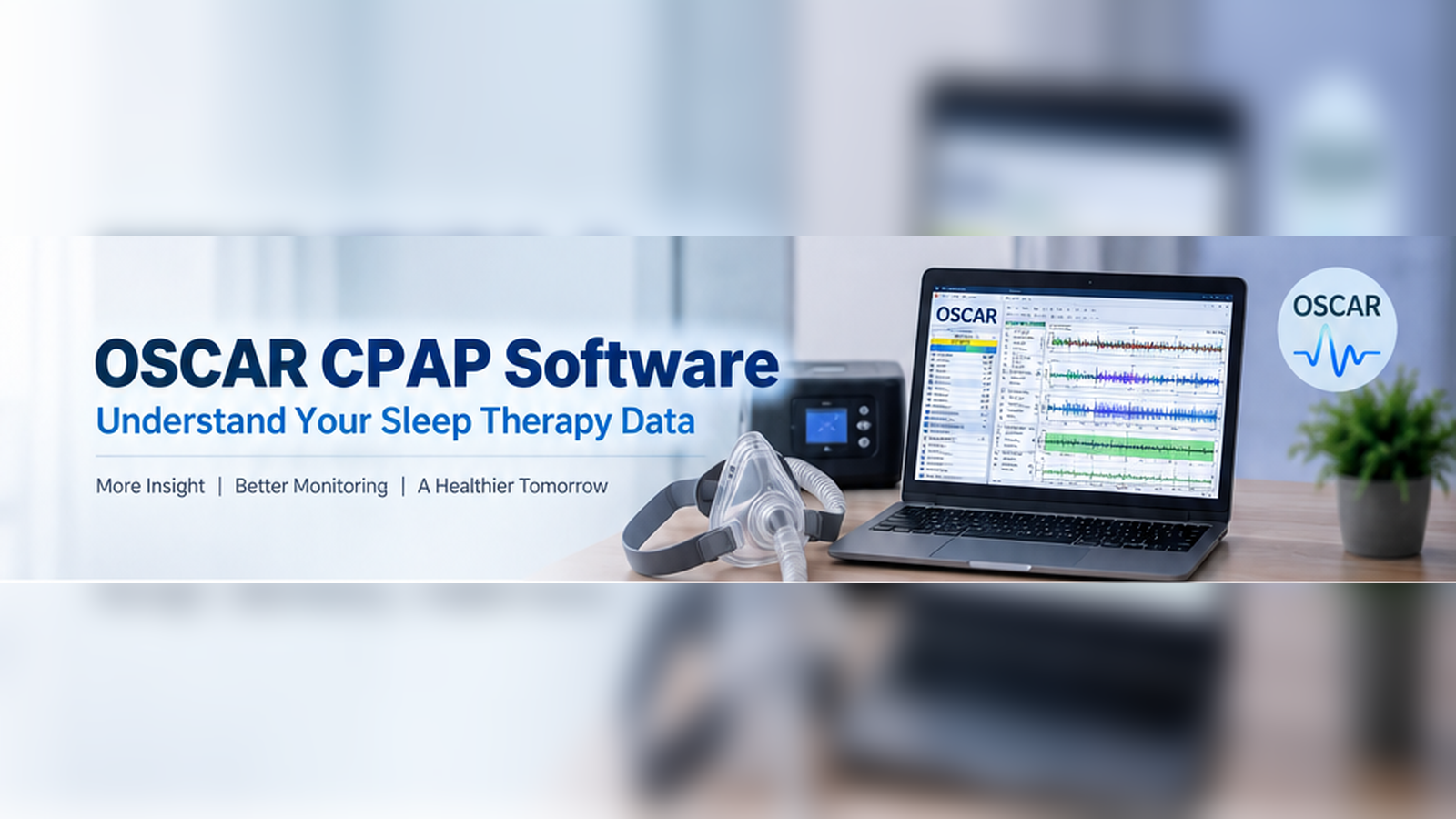
There was a time when people used to sleep peacefully at night. There were not as many tensions, needs, or unnecessary desires as we see today. In chasing these unnecessary desires and trying to meet the needs of life, we have gone so far that we can neither breathe peacefully, enjoy our personal life, nor sleep peacefully at night. When we cannot sleep, we need some solution or a person who can solve that problem. That person may come in the form of a doctor or a machine that tries to improve the issue because of which we have lost our peace. Then we may need sleep therapy, and doctors look at it through different tests, and one of them is called OSCAR CPAP. In today’s topic, we are going to understand what it is, how it works, and for what purpose it is used in sleep therapy.
What Does OSCAR CPAP Mean?
Before moving ahead, it is very important to know what OSCAR CPAP actually is.
The full form of OSCAR is (Open Source CPAP Analysis Reporter).
The interesting thing is that it is free, open-source computer software that reads and also studies the recorded sleep-therapy data of compatible CPAP/BiPAP machines. OSCAR CPAP has its own separate SD card for storage. Usually, a CPAP machine saves this detailed data on its SD card. OSCAR shows that data on a computer in the form of graphs, statistics, and reports so that doctors can properly monitor sleep graphs and reports.
If It Is Explained in Simple Words:
The job of a CPAP machine is to show what it was doing at night, how much pressure there was, how many total breathing events occurred, and whether there was any mask leak and, if there was, how much. OSCAR helps us understand that data in detail and then provides us with a final report.
One thing needs to be understood here: OSCAR itself does not provide CPAP therapy. It analyzes the complete data coming from the CPAP machine and displays it in front of us.
If you want to download it, the current release OSCAR 2.0.1 is listed on the official download page in September 2026, and the software is available for multiple platforms including Windows, macOS, and Linux. You can easily get it for free.
What Does OSCAR Actually Do?
According to its official OSCAR information, the software reads the detailed sleep data generated by CPAP and related machines. It converts this high-resolution information into graphs and statistics and keeps saving the data as well, where the data from some supported machines can be viewed closely at the breathing level, something that we humans normally cannot properly feel or see.
What Benefit Does OSCAR CPAP Give Compared to Other Apps?
The normal CPAP screen or manufacturer app that people use in the market often gives the user a limited summary, while the purpose of OSCAR is to provide more detailed analysis.
OSCAR CPAP provides this information:
- AHI
- apnea/hypopnea events
- pressure
- mask leak
- flow rate
- flow limitation
- snoring information
- machine usage
- in some devices, oximetry information
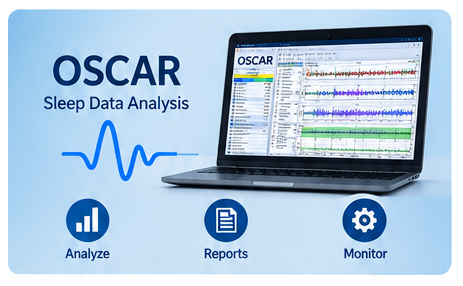
Apart from these, OSCAR help documentation also describes graphs on the Daily screen such as AHI, machine settings, events, flow rate, pressure, leak rate, snoring, and flow limitation. In this way, we get all of that in one app, for which we would otherwise have to download and use multiple apps.
The most important thing here is that “using a CPAP machine and understanding CPAP therapy are two different things. OSCAR gives people a way to see a detailed record of their nightly therapy.” As for CPAP, you have already learned about it.
Where Does OSCAR Get Its Data From?
OSCAR usually imports information from the SD card of a compatible CPAP machine, which has stored all of it during sleep. According to the official help guide, when the software is used for the first time, a profile is created in the software, and then the CPAP’s SD card can be inserted into the computer to import the recorded data.
After importing, the major sections include:
- Daily Page: We get to see the detailed data of a particular night.
- Overview Page: It shows the trends of multiple days or longer periods, where they are going up and where they are going down.
- Statistics Page: We easily get the summarized statistics of the therapy and everything we want to see in one place.
Important Point
Not every CPAP is compatible with OSCAR. If we talk according to the official OSCAR help, a separate compatibility list of supported machines and devices is maintained, and this list keeps expanding over time as our use increases.
“OSCAR can read data from many supported CPAP and bilevel machines, but compatibility depends on the machine and model.”
What Is AHI and What Is Its Role in OSCAR?
It is important to know what role AHI has in OSCAR. One of OSCAR’s important metrics is AHI — Apnea-Hypopnea Index.
In OSCAR, AHI helps you understand how many events were recorded during the night when breathing stopped or became lighter while sleeping. If there are more such events in one night, OSCAR shows their total and their details, which helps you understand your CPAP therapy more easily.
OSCAR can identify different event types separately, including:
- obstructive apnea
- central apnea
- hypopnea
- unclassified events in some machines
The Overview page can also show the AHI trend over multiple nights, making it easier to see which direction the recorded numbers are moving over time.
Important Caution
The most important thing is that a medical diagnosis or a change in treatment should not be made or suggested just by looking at one OSCAR number. It is necessary to understand OSCAR data in a clinical context, and it would not be right to blindly rely on it without a doctor’s guidance.
Why Is Mask Leak Important in OSCAR?
One of OSCAR’s interesting features is the Leak Rate graph.
Some airflow in CPAP masks is intentional so that exhaled CO₂ can properly vent out. Therefore, every airflow cannot be called a “bad leak,” and it cannot be depended on in that way. OSCAR documentation specifically explains the difference between intentional and excessive leakage, including how much leakage occurred and how much did not.
Here is another important thing that I think is very necessary to explain:
Different manufacturers may report leaks in different ways.
According to OSCAR documentation, there can be a considerable difference between the displayed leak metrics of ResMed machines and machines from some other manufacturers. Therefore, the leak number of one brand should not be blindly compared with another brand because every machine has its own estimate.
“A high-looking number on an OSCAR graph does not always mean the same thing across every CPAP machine.”
Difference Between Daily Data and Long-Term Trends
OSCAR does not show data for only one night.
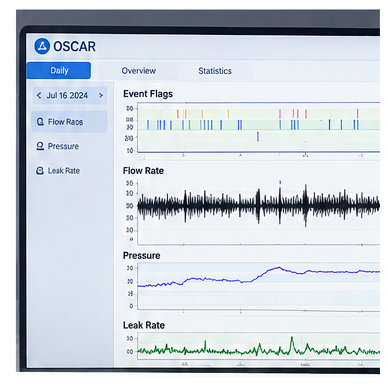
If we talk about daily trends, OSCAR does not show only one night’s data. The Daily Page provides a detailed picture of a specific night, while the Overview Page helps in viewing patterns over days, weeks, or longer periods.
According to the Overview documentation, one of its important uses is also to identify long-term trends that may not be obvious by looking at only a single night.
Example
If the AHI of one night is unusual, it does not automatically prove a long-term pattern. The trend across multiple nights can provide more context.
What Is OSCAR’s Biggest Advantage?
OSCAR is open-source and free software. The official website clearly says that the software is free.
One of its major advantages is that the user can get detailed visual information in one place.
According to official project information, OSCAR is used not only by home users but also by some physicians, therapists, and researchers to review or compare CPAP data.
But I would not say here that OSCAR CPAP replaces doctors or will replace them. Instead, OSCAR can be useful for reviewing detailed CPAP data, and users can discuss their reports with a healthcare professional.
OSCAR’s Basic Workflow
CPAP Machine → SD Card → Computer → OSCAR → Import Data → Daily/Overview/Statistics → Graphs & Trends
According to the official first-run documentation, the user creates a profile, inserts the machine’s SD card, and OSCAR imports that data. After the import, the Daily, Overview, and Statistics screens become available.
The OSCAR 2.0 installation guide also explains that after installing the software on a computer, a local data location is selected; the SD card should not be selected as OSCAR’s permanent data destination.
Most Important Questions
1. What is OSCAR CPAP?
OSCAR CPAP is free software that shows the sleep data from a CPAP machine. With its help, users can easily view AHI, pressure, mask leak, and breathing events.
2. What does OSCAR stand for in CPAP?
The full form of OSCAR is Open Source CPAP Analysis Reporter. It shows CPAP therapy data in the form of reports and graphs.
3. Is OSCAR CPAP software free?
Yes, OSCAR is free software. Users can install it on their computer and check data from a compatible CPAP machine.
4. Is OSCAR safe to use?
OSCAR is generally used to view and understand data. It does not control the treatment of the CPAP machine itself. For medical decisions, it is better to take a doctor’s advice.
5. How does OSCAR CPAP work?
OSCAR imports saved data from the CPAP machine, usually through an SD card. It then shows that data in graphs, numbers, and reports, making the therapy easier to understand.